
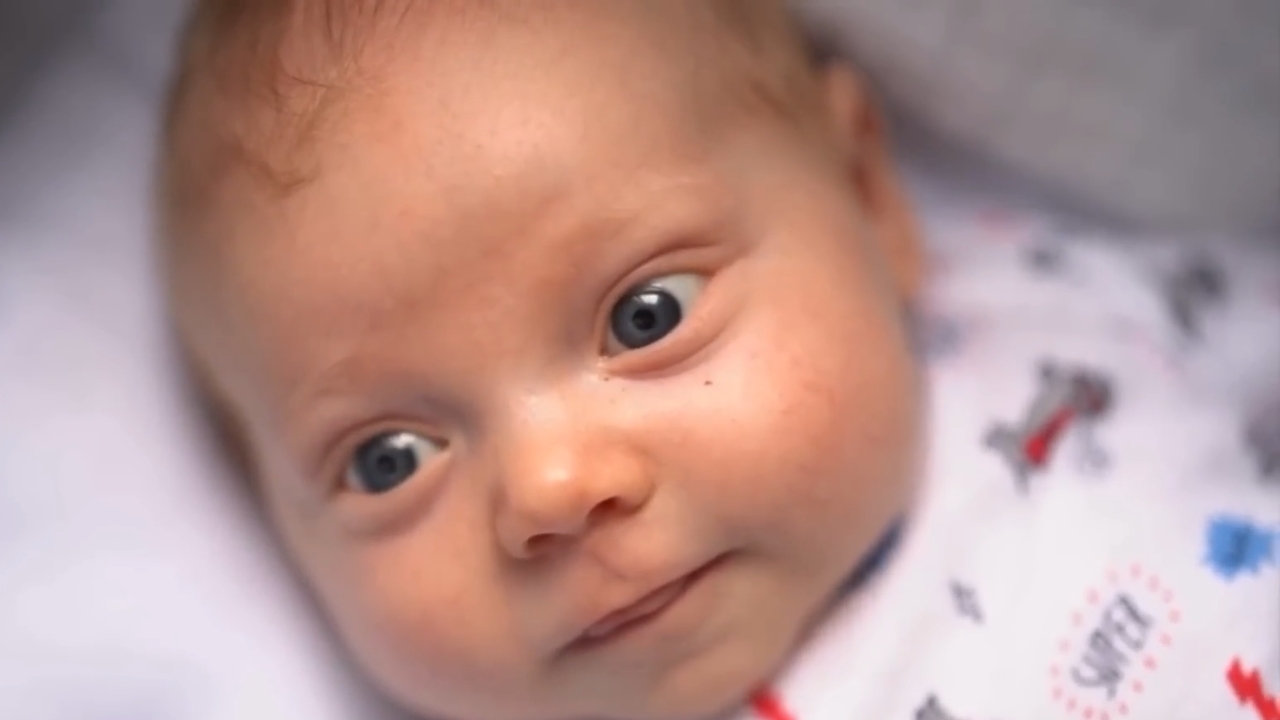
Gen Beta Covers Babies Born From 2025 to 2039, and the Oldest Are Just Learning to Talk

Last month I sat on the living room floor of my college friend Dana, in Columbus, while her daughter Nora handed me a plastic giraffe and said “dog.” Nora was born on January 9, 2025, which puts her among the oldest members of a generation that already has a name, a birth-year range and a forecast for the 22nd century.
Her vocabulary runs to about 10 words, and “dog” covers every animal she has met. I keep a spreadsheet of generation cutoffs by source, so I went home and checked who decided Nora is Gen Beta and what the label actually covers.
Gen Beta Is a Research Firm Label for Babies Born 2025 to 2039
The name comes from McCrindle, an Australian research and demographics firm that also coined Gen Alpha. By its definition, Gen Alpha covers births from 2010 to 2024, and Gen Beta covers births from 2025 to 2039. CBC laid out the range in its early January 2025 explainer on Generation Beta, days after the first babies arrived.
No U.S. government agency has published Gen Beta years, as far as I can find, and the Pew Research Center has not set a range either. The label is one firm’s choice that newsrooms adopted in the first days of 2025.
Generation Beta. People born from 2025 through 2039, as defined by McCrindle. The firm moved to the Greek alphabet with Gen Alpha, and its list already includes Gen Gamma for births from 2040 to 2054.
One of the First Was Born Three Minutes After Midnight
Babies born on January 1, 2025, became the first Gen Betas the moment the calendar turned, and reporters went looking for them. In India, All India Radio reported the birth of Frankie Remruatdika Zadeng at 12:03 a.m. at Synod Hospital in Durtlang, Aizawl, in the state of Mizoram.
View this post on Instagram
Frankie weighed 3.12 kilograms, or about 6 pounds 14 ounces. Indian outlets called the baby the first Gen Beta in the country, and that is the accurate version of the claim. Time zones meant babies in New Zealand and Kiribati reached 2025 hours earlier, so no single child can be named the first in the world.
Did you know? Under the McCrindle range, a baby born at 11:59 p.m. on December 31, 2024, is Gen Alpha, and a baby born two minutes later is Gen Beta. Twins delivered on either side of midnight would technically belong to different generations.
The Oldest Gen Betas Are About 21 Months Old
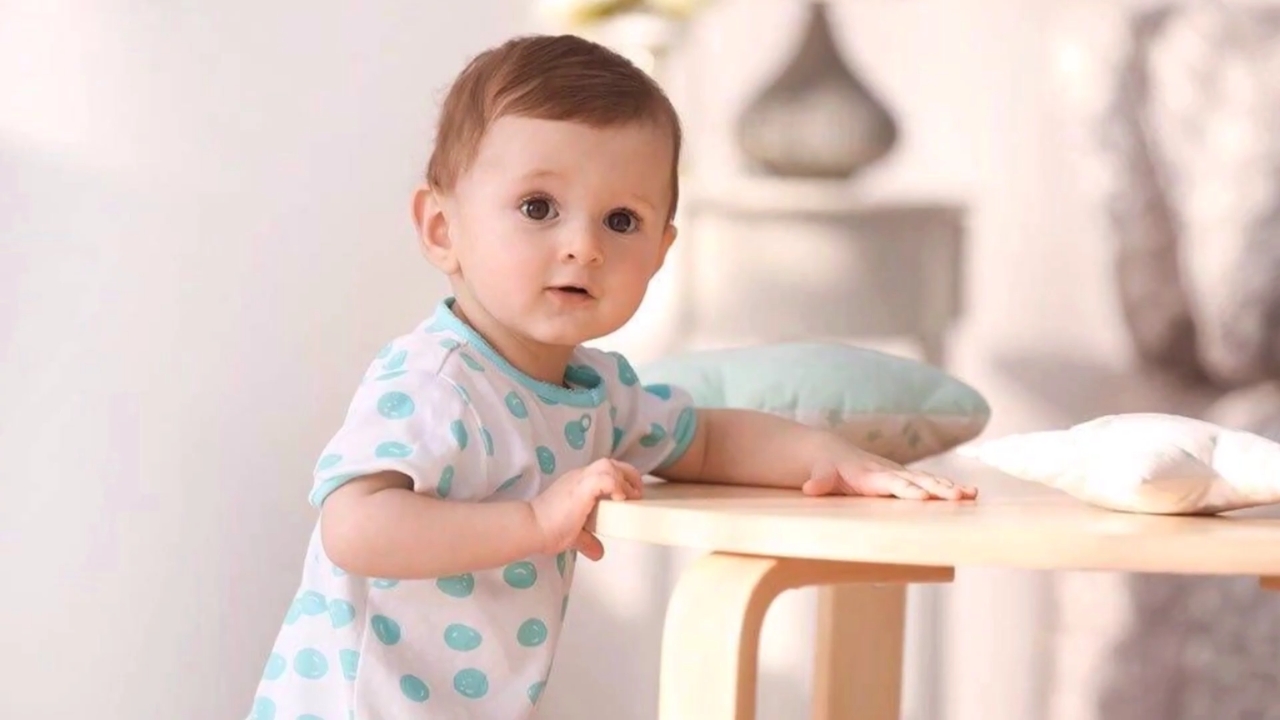
As of October 2026, the oldest members of Gen Beta are about 21 months old. They sit between two checkpoints on the CDC milestone lists, which is exactly where Nora is, pointing at giraffes and naming them after dogs.
Here are the language milestones the CDC lists for the ages around her.
- 18 months. Tries to say three or more words besides “mama” or “dada,” per the CDC 18-month milestone checklist.
- 18 months. Follows a one-step direction without any gestures, such as handing over a toy when asked.
- 2 years. Says at least two words together, like “more milk,” according to the CDC 2-year milestone checklist.
- 2 years. Points to things in a book when you ask where they are.
Every child born in 2025 is somewhere along that line right now. The generation with a projected 22nd-century lifespan has, at most, a two-word sentence.
Most Gen Beta Babies in the U.S. Have Millennial Parents
Gen Beta is often described as the children of younger millennials and older Gen Zers. The CDC counted 3,606,400 U.S. births in 2025, down about 1% from 3,628,934 in 2024, according to its provisional births report for 2025.
The US registered 3,604,640 births in 2025, 0.4% fewer than the corresponding preliminary figures of 2024. The TFR declined to 1.58 children per woman. South Dakota is the only state remaining close to replacement level, but all the other rural midwestern states have gained ground compared to the US average as well.
— Birth Gauge (@BirthGauge) January 29, 2026
The birth-year column is my own arithmetic, so treat it as approximate. Even so, mothers aged 30 to 44, nearly all millennials by Pew count, had about 1.9 million of the 3.6 million births.
Only the groups aged 35 and older grew compared with 2024. Births to mothers under 20 fell by about 8%.
Birth and divorce statistics measure separate changes in American family life. The U.S. divorce rate has declined by more than 40% since 2000, although the two trends alone cannot establish a common cause.
Everything Beyond the Birth Years Is a Forecast
The birth years are a definition. Almost everything else written about Gen Beta is a prediction, and McCrindle frames it that way, even when headlines do not. The firm projects three things.
- Gen Beta will make up 16% of the world population by 2035.
- Many of its members will live into the 22nd century.
- AI and automation will shape their schooling, work and health care from the start.
The first two rest on population math and life-expectancy trends, and they could hold up reasonably well. The third describes the world adults expect to build, not anything a 21-month-old has done.
A $100 corded phone for Gen Alpha offers an interesting counterpoint to predictions of an all-screen childhood. Parents still see value in a phone without apps or a browser.
I read that last forecast the way I read most generational predictions, as a statement about the people making it. None of the three is a finding about the children themselves.
Why I Think Naming Babies Is Premature
In 2018, I asked 140 of my high school students about generation stereotypes, and most of them had never heard the term Gen Z. They were the generation in every think piece that year, and the label had not reached them yet.
I have seen the same problem with the millennial pause, a brief silence before someone speaks on camera. The habit became a generational stereotype despite having no clear connection to birth years.
Gen Beta is that gap at its widest. Nora cannot say her own name, and she already has a cohort, a list of traits and a forecast lifespan. A label assigned before a child can talk can only describe what adults hope, fear or plan to sell.
Psychologists found a similar bias in why adults believe kids no longer read books. Adults with strong literacy skills were more likely to assume children enjoyed books more in the past.
The label does have uses. Marketers, school planners and researchers need a quick way to say “kids born after 2024.” It stops working the moment it starts describing personalities nobody has had time to form.
Pew Has Stepped Back From Generation Labels
In May 2023, Pew announced it would publish fewer generational studies and compare generations only with suitable long-term data. Kim Parker, who directs its social trends research, wrote that broad generation definitions can be arbitrary and can reinforce stereotypes.
Pew followed that approach in its 2026 research on young adults’ job prospects, where results were reported by age group rather than generational labels.
Pew still uses its older ranges. Its explainer on where millennials end puts millennial births from 1981 to 1996 and starts Gen Z in 1997 with no end year. McCrindle, by contrast, places Gen Z from 1995 to 2009.
Under Pew ranges, someone born in 1995 is a millennial. Under McCrindle ranges, the same person is Gen Z. Both definitions are in use today, and neither one is official.
The Xennial microgeneration poses a similar boundary question. Its 1977–1983 birth range crosses Pew’s Gen X–Millennial cutoff.
I was born in 1995, so I have lived inside that overlap my whole adult life.
The term unc has become another joke about millennials, although teenagers also use it for people who are technically Gen Z. Age-based stereotypes rarely respect the boundaries researchers assign to generations.
What Parents of a 2025 Baby Can Actually Use
If you have a child born in 2025, the generation label changes nothing you need to do. The milestones matter far more. The CDC milestone tracker and screening guidance says to talk with your doctor right away if a child misses milestones, loses skills or worries you.
The American Academy of Pediatrics recommends general developmental screening at 9, 18 and 30 months, and autism screening at 18 and 24 months. For a child born in early 2025, the 24-month visit lands in early 2027.
Parents who are still concerned after a visit can call their state early intervention program to ask about services. Dana keeps the CDC checklist on her fridge, and it has done more for her than any trend report about Nora’s cohort.
Back on Dana’s Living Room Floor
Before I left, Dana asked whether Nora would grow up feeling Gen Beta, the way some of us grew up feeling millennial. I gave her the honest answer. Nobody knows, and the word will probably mean something different by the time Nora can spell it.
That night I added Nora to the Gen Beta row of my spreadsheet, with a note beside her birthday. It says she has about 10 words and calls every animal a dog. Of everything written about her generation so far, it is the only entry I collected myself.